Raw Peyote Cactus is a highly underrated psychedelic. The mescaline experience isn’t going to inject you into other dimensions like ayahuasca or DMT . Peyote is a species of cactus found in the Southern United States and Mexico. It’s a very unassuming cactus — it’s small, has no spines, and doesn’t grow much larger than a pin cushion. A single peyote cactus is often referred to as a “button”.
Despite its humble appearance, the peyote cactus contains the highest concentration of mescaline of any other cactus at around 3–6% of the dried weight.
Peyote grows exceptionally slow — taking up to 15 years to reach maturity. The average user requires several buttons of peyote cactus for a single dose. An experienced peyote user may take as many as 15 or 20 buttons at a time.
What is Raw Peyote Cactus?
Raw Peyote (Lophophora williamsii) is a small, spineless cactus native to the Chihuahuan Desert in Mexico and South Texas. Unlike towering cacti, Peyote grows as “buttons”—small, disc-shaped mounds that barely crest the soil. This slow-growing succulent contains over 50 alkaloids, with mescaline serving as the primary psychoactive driver. For millennia, indigenous groups like the Wixárika and members of the Native American Church have utilized Peyote in sacred ceremonies for spiritual healing. Historically, the plant represents a “grandfather” spirit, offering guidance and profound introspection. However, because Peyote takes over a decade to reach maturity, it currently faces severe conservation threats. Consequently, modern seekers often turn to synthetic alternatives or faster-growing cacti to protect these wild populations. Ultimately, raw Peyote remains one of the most culturally significant and chemically complex entheogens in existence.
2. What’s The Dose of Peyote Cactus?
Dosing raw Peyote is notoriously difficult because alkaloid concentration fluctuates based on the plant’s age and environment. Generally, users measure dosage by the number of dried or fresh “buttons.”
Microdoses: A sub-perceptual microdose typically consists of 0.5 to 2 grams of dried material. Many adopt this regimen to enhance focus and emotional resilience without experiencing any visual distortions.
Standard Psychoactive Dose: For a full ceremonial experience, a moderate dose usually requires 6 to 12 buttons (roughly 20 to 50 grams of dried cactus). This amount delivers approximately 200mg to 400mg of mescaline. Because Peyote produces a significant “body load” and intense nausea, practitioners often recommend a gradual intake. Furthermore, the slow onset means users should wait at least two hours before considering an additional dose to ensure they do not exceed their comfort level.
3. What Does A Peyote Cactus Trip Feel Like?
A Peyote trip feels like a vivid, 12-hour immersion into a world of saturated color and deep emotional clarity. Unlike the often-chaotic “headspace” of other substances, Peyote provides a lucid, grounded experience that users describe as “earthy.” Initially, the journey begins with physical discomfort or a “purge,” which many traditionalists view as a necessary spiritual cleansing. Once this passes, intricate geometric patterns and “classic” kaleidoscopic visuals emerge with eyes closed. Emotionally, the cactus acts as a powerful heart-opener, fostering feelings of universal love and intense self-reflection. Furthermore, it heightens sensory perception, making music and nature feel profoundly interconnected. Finally, the experience leaves a lingering “afterglow” of mental peace, helping participants integrate the spiritual lessons they received during the peak hours of the journey.
4. How Strong is Peyote Cactus vs. Other Psychedelics?
Peyote offers a unique pharmacological profile that distinguishes it from more common tryptamines.
Vs. LSD & Shrooms: Peyote feels much more “physical” and lasts longer. While LSD is analytical and mushrooms are mystical, Peyote feels deeply ancestral and grounded.
Vs. DMT: DMT provides a short, “otherworldly” blast, whereas Peyote builds slowly, allowing for a 12-hour reflective marathon.
Vs. Ketamine: Unlike the “out-of-body” dissociation of ketamine, Peyote keeps you intensely connected to your body and the natural world.
Vs. Synthetic Mescaline: Synthetic mescaline feels “cleaner” and sharper. Conversely, Peyote feels “richer” due to its complex alkaloid entourage, which adds a dreamy, sedative layer to the trip.
Vs. MDMA: While both share phenethylamine roots, Peyote offers true hallucinogenic depth that MDMA lacks, though both facilitate deep emotional empathy.
5. How to Store Peyote Cactus
Proper storage is essential to preserve the delicate alkaloids within Peyote. If you have fresh buttons, you must either consume them quickly or dry them thoroughly to prevent rot. To dry them, slice the buttons thinly and use a dehydrator or place them in front of a fan until they become “cracker dry.” Once dried, store the buttons in an airtight glass jar to prevent moisture absorption. Furthermore, place the jar in a cool, dark cupboard, as UV light and heat can slowly degrade the mescaline content. Including a food-grade silica desiccant pack inside the jar ensures a 0% humidity environment, which is vital for long-term preservation. If you follow these steps, the dried cactus can retain its full potency for several years, remaining shelf-stable and ready for research or ceremonial use.
6. How Does Peyote Cactus Work?
Peyote works primarily as a 5-HT2A serotonin receptor agonist. By mimicking serotonin, the mescaline in Peyote alters neural firing patterns, particularly in the prefrontal cortex, which governs perception and mood. Additionally, its unique alkaloid profile influences dopamine and norepinephrine receptors, contributing to its stimulating and heart-opening qualities.
Is it Safe? For most, Peyote has a high safety profile. However, it can increase heart rate and blood pressure, so individuals with heart conditions or those taking MAOIs must exercise extreme caution.
Is it Legal? In 2026, Peyote remains Schedule I (USA) and Schedule III (Canada). While the Native American Church has specific legal exemptions for ceremonial use, personal possession or extraction by non-members remains strictly prohibited in most jurisdictions. Always verify local regulations before engaging with this plant.
7. What Does Peyote Cactus Look Like?
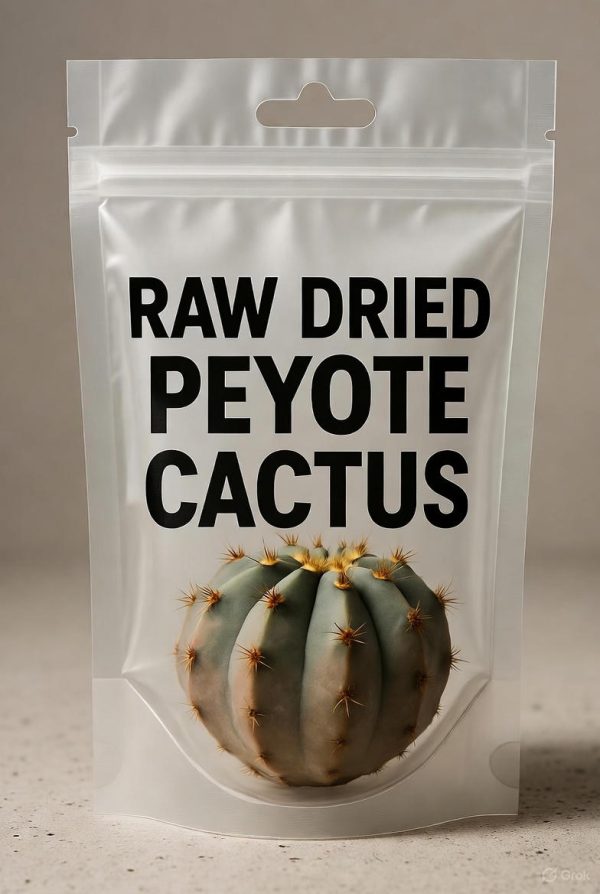
Peyote is a visually distinct, “button-like” succulent that lacks the sharp spines found on most cacti. Instead, it features small, soft tufts of white or yellowish “wool” (areoles) scattered across its blue-green or greyish-green skin. The plant grows in a low, rounded shape with vertical ribs that give it a segmented, pumpkin-like appearance. Usually, a single button measures between 2 and 7 centimeters in diameter. When the cactus blooms, it produces a delicate, pale pink or white flower that emerges directly from the center of the crown. Underground, the plant maintains a massive, carrot-shaped taproot that anchors it into the rocky soil. When harvested, the “button” is sliced off at the soil line, leaving the root intact so the plant can slowly regenerate over many years.
8. How Long Does Mescaline Stay In The System?
Mescaline, the primary active component in Peyote, has a longer presence in the body than many other psychedelics. After ingestion, the effects last for 10 to 14 hours, but the molecules remain detectable long after the “afterglow” fades. Generally, mescaline stays in the bloodstream for about 24 hours. However, it remains detectable in urine for 2 to 4 days for most individuals. Standard 5-panel workplace drug tests do not typically screen for mescaline, but specialized toxicology tests can easily identify it. For those concerned with long-term detection, mescaline can be traced in hair follicles for up to 90 days. Because the body excretes a significant portion of the dose unchanged, hydration and metabolic rate play large roles in how quickly the system clears the compound.
Frequently Asked Questions
1. How Long Does Mescaline Stay In The Body?
Mescaline can be detected in urine for up to three days but may remain detectable in hair samples for up to 90 days. Blood tests can only detect mescaline within 24 hours of use and saliva for up to 10 days (but usually less than 3).
It’s legal to order peyote, San Pedro, and Peruvian torch cacti as decorative plants in some countries — including the US, Canada, Germany, Ukraine, and New Zealand.
You can sometimes find these cacti in nurseries in the US — but they won’t be labeled San Pedro. You can identify them by the tiny spines along a few verticals and the pattern on the smooth columns.
These cacti grow relatively quickly (for a cactus). It can take several months for the seeds to sprout, but most growers propagate new plants from cuttings instead — which grow into large plants in just a few years.
Expect to pay upwards of $50 per plant. It will then take 2–5 years for them to grow large enough to harvest (> 4 feet). Usually, San Pedro will max out around 7 feet in height before being knocked over under their weight. Cut and propagate some for new plants, and dry the rest.
3. Is Mescaline & Mezcal the Same Thing?
Mescaline is sometimes confused with the alcoholic spirit, mezcal. The names of these two products are similar, but they couldn’t be more different.
Mezcal is a distilled spirit made from the agave plant. It’s the same as tequila but can be made from any agave plant (tequila needs to be made from a specific type of agave called Agave tequilana or “blue agave”).
Mescaline is the active ingredient in psychoactive cacti (Lophophora williamsii) that have no relationship to the agave plant.
4. Why is Mescaline So Underrated as a Psychedelic?
Mescaline is not common among the general public, but those who have used it often return to mescaline after trying other psychedelics.
Let’s consider the stereotypical mescaline user — the old rebellious hippie. They’re usually pretty wise and have found some degree of success in both business and family life. They’re now enjoying their old age with plenty of travel and healthy social life.
They’ve done it all and have come full circle back to mescaline in their old age. The mescaline experience can be very insightful, but the primary underpinning of this compound is that it’s “grounding.” It brings you to the present moment and shows you just how much fun it is to be alive.
5. Is Huachuma the Same As San Pedro?
Yes, Huachuma is the local name for the San Pedro cactus (Echinopsis pachanoi) in Peru and other regions of the Andes mountains where it grows naturally.
6. How to Grow Peyote Cactus
Growing Peyote (Lophophora williamsii) from seed requires extreme patience, as this species is one of the slowest-growing cacti in the world. To begin, you must use a well-draining mineral substrate, typically consisting of 70% inorganic materials like pumice, perlite, and limestone. Because seedlings are incredibly fragile, you should maintain a high-humidity environment using a plastic cover for the first few months. Furthermore, provide bright but indirect sunlight, as direct afternoon sun can easily scorch the young, tender buttons. As the plants mature, transition them to a cycle of deep watering followed by a total drying out of the soil. Interestingly, a Peyote cactus can take over a decade to reach maturity in a home setting. Consequently, many cultivators prioritize consistent temperature management between 21°C and 32°C to ensure steady, healthy development throughout the years.
7. Where Does Raw Peyote Cactus Grow?
Naturally, Raw Peyote Cactus grows exclusively in a narrow geographic range within the Chihuahuan Desert. This region spans across Northern Mexico and into the Rio Grande Valley of South Texas. Specifically, the plants thrive in rocky, limestone-rich soils and often hide under “nurse plants” like thorny shrubs to stay protected from the intense desert sun. Because they grow so low to the ground, they are often difficult to spot in the wild. However, due to habitat loss and decades of over-harvesting, wild populations are currently declining at an alarming rate. Consequently, while it once flourished across vast desert plains, it is now primarily found on private ranch lands in Texas and protected zones in Mexico. This scarcity has led to increased legal protections and a global push toward sustainable, indoor cultivation to prevent the species from disappearing entirely.
8. Where Does Peyote Come From?
Peyote comes from a deep lineage of indigenous tradition, with archaeological evidence of its use dating back over 5,700 years. The name itself derives from the Nahuatl word peyotl, used by the Aztecs to describe this sacred “divine messenger.” Historically, the plant originated in the arid scrublands of North America, where it became a cornerstone of spiritual and medicinal life for tribes like the Wixárika (Huichol). During the mid-19th century, its use spread northward, eventually leading to the formation of the Native American Church (NAC). To these practitioners, Peyote is not merely a plant but a sacrament that facilitates direct communion with the Great Spirit. Thus, while it is botanically a desert succulent, its true origin lies in the rich, ancestral heritage of the indigenous peoples who have protected and utilized it for millennia.
Traditionally, users take Raw Peyote Cactus by consuming the “buttons,” which are the disc-shaped crowns cut from the top of the root.
Chewing: Most commonly, the fresh or dried buttons are chewed thoroughly and swallowed. However, because the flavor is exceptionally bitter, many people find this method challenging.
Tea: Alternatively, you can slice the buttons and simmer them in water to create a potent, dark tea. This method often helps the body absorb the alkaloids more quickly, though the taste remains intense.
Capsules: In modern research settings, dried Peyote is often ground into a fine powder and placed into gelatin capsules. This prevents the bitter taste entirely and allows for more precise dosing. Regardless of the method, the “purge”—or nausea—is a frequent part of the onset, typically occurring within the first hour as the body adjusts to the complex alkaloid profile.
Grams
100 Grams, 200 Grams, 1000 Grams
Reviews
There are no reviews yet.
Be the first to review “Raw Peyote Cactus”Cancel Reply
Reviews
There are no reviews yet.