Ibogaine HCl represents the pinnacle of botanical refinement, transforming the raw Tabernanthe iboga root bark into a highly purified hydrochloride salt. By isolating the primary alkaloid, scientists have created a standardized compound that eliminates the unpredictable variables found in raw plant matter. In 2026, researchers prioritize this salt form because it allows for precise, milligram-perfect dosing in clinical settings. Furthermore, Ibogaine HCl offers a much cleaner physiological profile, as it lacks the bulky plant waxes and tannins that typically cause severe gastric distress. This pharmaceutical-grade preparation has become the global gold standard for addiction interruption and deep neurological “resets.” Consequently, those seeking a predictable and manageable therapeutic journey often choose Ibogaine HCl over traditional botanical alternatives. Ultimately, this refined salt bridges the gap between ancient African wisdom and modern medical rigor, providing a reliable path for profound personal transformation.
What is Ibogaine HCl?
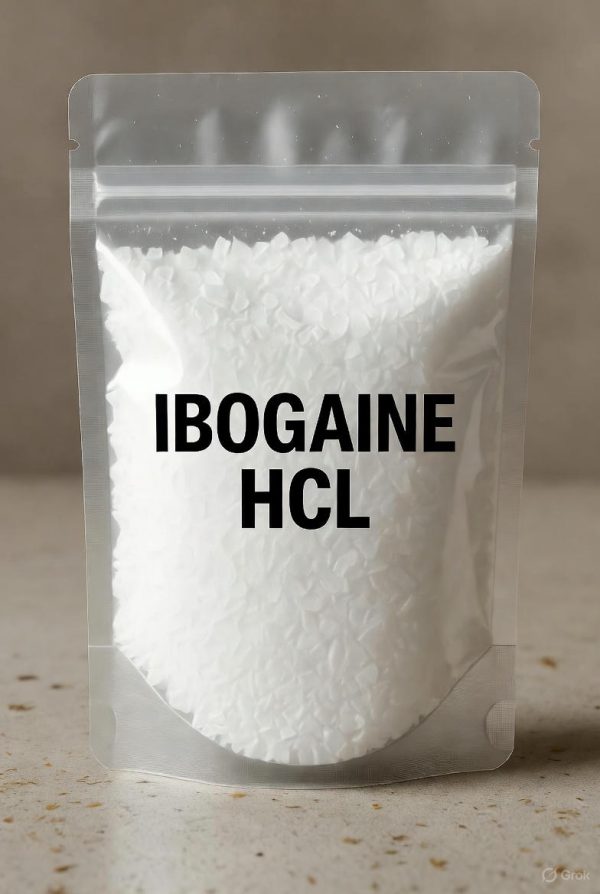
Ibogaine HCl is the white, crystalline hydrochloride salt form of the indole alkaloid found in the West African Iboga shrub. Unlike “Total Alkaloid” (TA) extracts, which contain a spectrum of plant compounds, Ibogaine HCl undergoes a rigorous purification process to reach concentrations of 95% to 99%.
Specs & Technical Details: On a molecular level, this compound features the chemical formula C20H26N2O. HCl. It appears as a fine, off-white to brilliant white powder that dissolves easily in water or gastric juices. Because it is a stable salt, it maintains a much longer shelf life than organic resins. Moreover, its high purity means that the biological load on the liver is significantly reduced. This technical precision allows clinicians to calculate a “Flood Dose” with absolute accuracy, ensuring that the patient receives the exact therapeutic amount required for their body weight without the interference of secondary, non-essential alkaloids.
What Does Ibogaine HCl Feel Like ?
Experiencing Ibogaine HCl feels like an intense, multi-phased “neurological reboot” that lasts for several days.
The Visionary Stage: During the initial $4$ to $8$ hours, users typically encounter a “waking dream” state. Unlike the swirling patterns of LSD, Ibogaine visions appear as coherent, cinematic memories or symbolic archetypes. You might feel as though you are watching a high-definition documentary of your own life, allowing you to witness past traumas with a strange, objective calm.
The Introspection Phase: Once the visions fade, a long period of deep “gray-screen” reflection begins. During this stage, which can last up to $20$ hours, the mind processes the earlier insights with incredible lucidity. Physically, you will likely feel a heavy “buzzing” sensation and a temporary lack of motor coordination known as ataxia. This phase demands complete stillness, fostering a profound sense of mental “decluttering” and emotional neutrality.
What Does An Ibogaine HCl Trip Feel Like?
An Ibogaine HCl trip feels significantly more “clinical” and “sober” than the typical psychedelic experience. While you may see vivid internal landscapes, you remain remarkably present and aware of your surroundings. Many describe the sensation as a “stern but fair” teacher conducting a deep-dive audit of their subconscious mind. Physically, the onset often brings a distinct humming or digital-like vibration in the ears, followed by a heavy, grounded feeling in the limbs. Furthermore, the experience lacks the “emotional chaos” of substances like psilocybin; instead, it provides a detached, analytical lens through which to view your behaviors. It feels less like a recreational “trip” and more like a profound spiritual surgery. By the time the experience plateaus, you often feel a sense of absolute mental silence, as if the “background noise” of your habitual thoughts has been completely muted.
How Long Does Ibogaine HCl Last?
Ibogaine HCl is famous for its exceptional duration, requiring a dedicated multi-day commitment. The acute, visionary peak usually persists for 24 to 36 hours after ingestion. However, the total process of returning to a “normal” state takes much longer. After the primary visions subside, the introspective phase keeps the user in a state of wakeful reflection for another day. Furthermore, most users experience persistent insomnia for 48 to 72 hours as the brain enters a state of high neuroplasticity. Because the body converts Ibogaine into its long-lasting metabolite, noribogaine, the physiological and psychological effects can gently linger for weeks. Consequently, integration is not just a suggestion; it is a mandatory part of the process. You must set aside at least five days for the experience, recovery, and the beginning of the “afterglow” period.
How to Store Ibogaine HCl
To preserve the molecular stability of Ibogaine HCl, you must store it in a way that prevents oxidation and moisture damage. Because it is a stable hydrochloride salt, it is much hardier than botanical powders, but it still requires care. First, place the powder or capsules in an amber glass vial to shield them from ultraviolet light, which can degrade the alkaloid’s potency over time. Next, ensure the container has an airtight seal and store it in a cool, dry location, such as a climate-controlled cabinet. Avoid storing it in the refrigerator, as condensation can introduce moisture that might ruin the crystalline structure. For long-term storage, adding a food-grade silica desiccant pack inside the vial will ensure a 0% humidity environment. If kept dark, cool, and dry, high-purity Ibogaine HCl can maintain its full therapeutic strength for five years or more.
How Does Ibogaine HCl Work?
Ibogaine HCl works through a complex “multitarget” pharmacological approach, affecting several brain systems simultaneously. Primarily, it acts as an NMDA receptor antagonist and a sigma-2 receptor agonist, which contributes to its dissociative and visionary properties. Most significantly, it triggers the release of Glial Cell Line-Derived Neurotrophic Factor (GDNF). This remarkable protein facilitates the repair and survival of dopamine neurons, essentially “cleaning” the brain’s reward circuitry. Furthermore, it interacts with serotonin transporters and opioid receptors, which helps to “reset” the neural pathways associated with habituation and craving. By temporarily blocking the brain’s habitual “noise,” Ibogaine HCl creates a window of profound neuroplasticity. During this time, the brain can effectively “re-wire” itself, making it much easier for individuals to break long-standing patterns of behavior or chemical dependency.
What Does Ibogaine HCl Look Like?
High-purity Ibogaine HCl appears as a very fine, crystalline powder that ranges in color from brilliant white to a light off-white. Unlike “Total Alkaloid” extracts, which are often chunky, brown, or resinous, the HCl salt is highly refined. When viewed under a lens, the powder may show tiny glints, indicating its crystalline nature. It is typically dry and free-flowing, never sticky or clumpy. If the material looks dark brown or has a strong “earthy” odor, it likely contains more plant impurities and is not a pure HCl salt. Most often, suppliers provide it in clear or white gelatin capsules for precise dosing, though the loose powder itself is extremely bitter to the taste. Ultimately, the “whiter” the powder, the more refined the product, signaling a higher level of laboratory processing and purity for the end user.
How Long Does Ibogaine HCl Stay In The System?
Although the “trip” ends within a few days, Ibogaine HCl remains active in your body for a significant period. Once ingested, the liver metabolizes the compound into noribogaine, which has an incredibly long half-life. While the primary compound disappears from the blood within 24 to 48 hours, noribogaine stores itself in fatty tissues and can remain detectable for 1 to 4 months. This persistent presence is actually beneficial, as it provides a “therapeutic trickle” that maintains mood elevation and suppresses cravings long after the visionary phase. In terms of drug testing, standard 5-panel or 12-panel tests do not look for Ibogaine. However, specialized lab screenings can detect its presence in urine for several days. For those concerned with long-term detection, its metabolites can remain in hair follicles for up to 90 days.
What’s the Dose of Ibogaine HCl?
Dosing Ibogaine HCl requires extreme precision, as the compound exerts a heavy load on the cardiovascular system.
Microdosing: A sub-perceptual microdose typically involves 10mg to 40mg of Ibogaine HCl. Users adopt this regimen to improve mood and cognitive clarity without experiencing any hallucinations or ataxia.
Flood Dose: For addiction interruption or deep psychological work, clinicians calculate a “Flood Dose” based on weight, usually ranging from 15mg to 20mg per kilogram. For an average adult, this might total 1,200mg to 1,600mg. Because this level of Ibogaine significantly impacts heart rhythm, you must never attempt a flood dose without a prior EKG/ECG test and professional medical supervision. Starting with a “test dose” of 100mg is also a common safety protocol to check for hypersensitivity before administering the full amount.
Is Ibogaine HCl Legal?
In 2026, the legal status of Ibogaine HCl remains a complex global mosaic. In the United States, Ibogaine is a Schedule I controlled substance, meaning it is illegal to manufacture, possess, or distribute. However, several U.S. cities have passed decriminalization measures for “natural plant medicines,” though this often excludes purified HCl salts. Conversely, countries like Mexico, Brazil, and New Zealand allow for legal or unregulated Ibogaine clinics where treatment occurs under medical supervision.In Canada, it appears on the Prescription Drug List but remains restricted for personal possession. Because laws vary so widely between jurisdictions, you must verify your local regulations before sourcing or transporting this compound. While the medicinal value is increasingly recognized, the purified HCl form is often scrutinized more heavily than raw botanical extracts by customs and law enforcement agencies.
Is Ibogaine HCl Dangerous?
While Ibogaine HCl is a powerful therapeutic tool, it is also one of the most physically risky psychedelics.
Side Effects: Common reactions include intense nausea, vomiting, dizziness, and tremors.Many users experience a total loss of motor coordination (ataxia) for $24$ hours.
Cardiac Risks: The most significant danger is QT interval prolongation. Ibogaine can slow the electrical signals of the heart, potentially leading to fatal arrhythmias in predisposed individuals.
Drug Interactions: Ibogaine HCl interacts dangerously with many substances, particularly opioids, methadone, and antidepressants like SSRIs. Combining these can lead to heart failure or serotonin syndrome. Consequently, a full medical screening—including a heart stress test and blood work—is an absolute prerequisite. Never undergo an Ibogaine experience alone or without a “clean-out” period from other medications, as these interactions represent the primary cause of Ibogaine-related fatalities.
Ibogaine HCl occupies a unique “oneirogenic” category, making it fundamentally different from common tryptamines.
Vs. Ayahuasca: While Ayahuasca provides a $4$-hour emotional “purge” through visuals, Ibogaine HCl offers a $36$-hour narrative life review that feels more like a clinical “brain-wash.”
Vs. 5-MeO-DMT: 5-MeO-DMT is a $15$-minute “ego-death” into white light. Ibogaine HCl is a marathon that keeps you grounded in your personal history and memories.
Vs. Ketamine: Ketamine provides a short dissociative state often used for depression. Ibogaine HCl provides a much more long-term “biological reset” specifically targeted at addiction and deep-seated behavioral ruts.
Ultimately, Ibogaine HCl is considered the “heavyweight” of the psychedelic world. It is less “trippy” and more “surgical,” focusing on fixing the brain’s hardware rather than just altering its software for a few hours.